
Mother Collection
A subtle narrative of love, peace, and the most endless feeling in the world, framed in a painting.


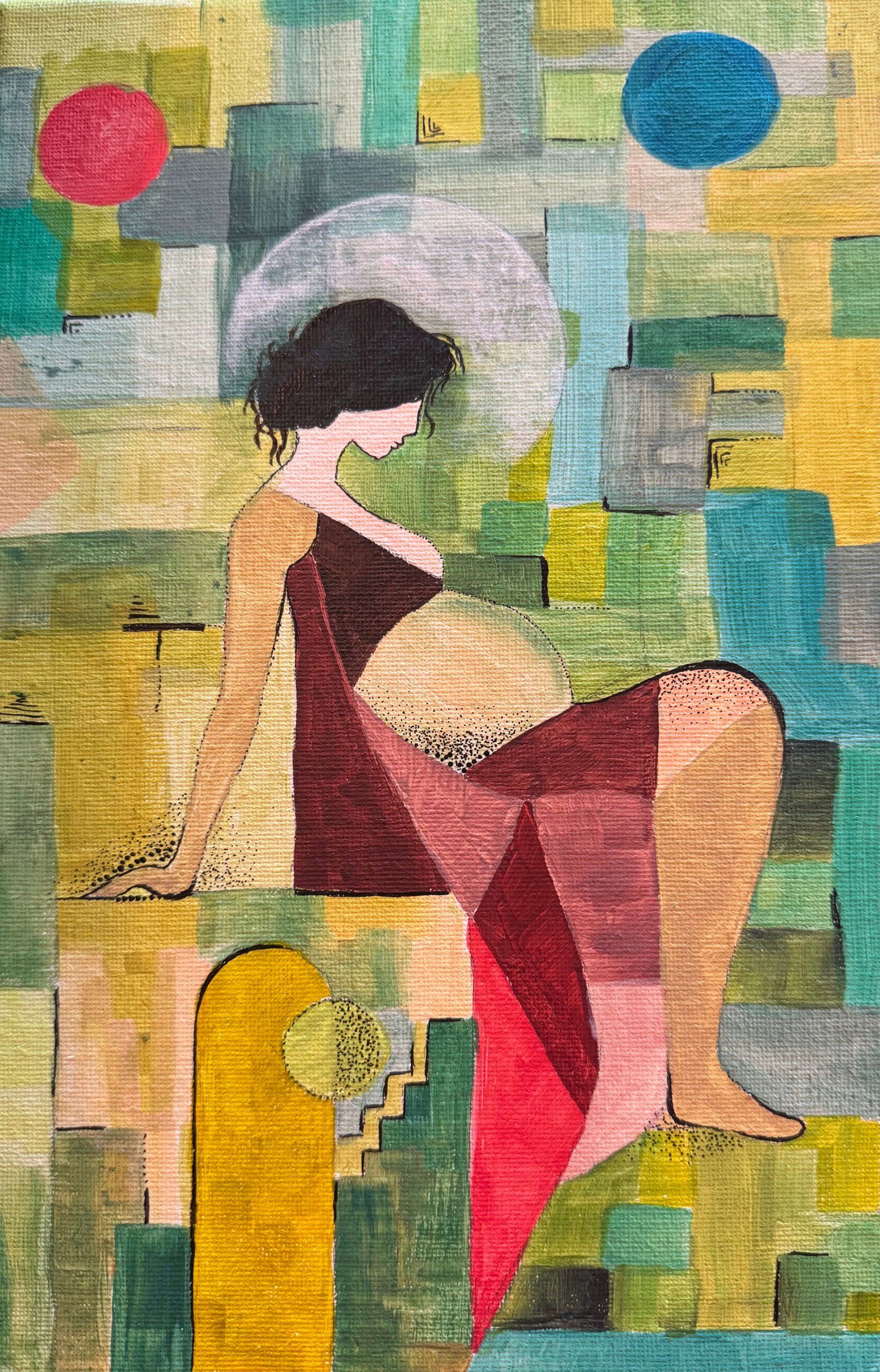
Becoming
This work explores pregnancy as a state of transformation—not only of the body, but of identity. The female figure occupies her space with both vulnerability and confidence, while the fragmented geometry surrounding her suggests a world that continues to shift and rearrange itself. Her exposed pregnant body is not presented as fragile, but as powerful: a body creating life while remaining entirely her own. The circular forms evoke cycles, continuity, and the passage from one identity into another. She is becoming a mother, without ceasing to be a woman.
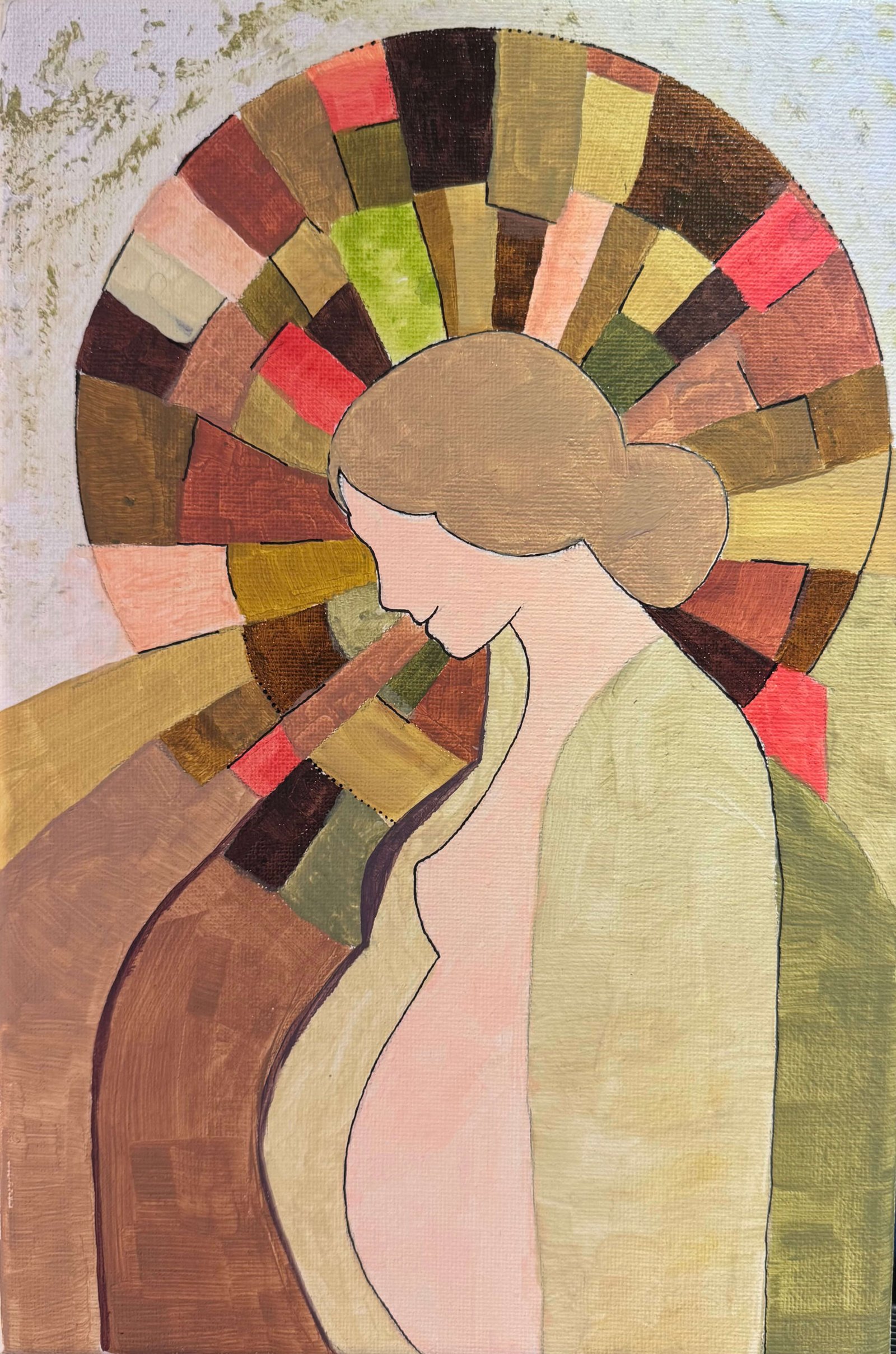
Within Her
Pregnancy is not only the creation of a new life, but also the transformation of a woman herself. The circular mosaic surrounding the figure represents the many emotions, memories, fears, and hopes that gather around her during this journey. Her lowered head suggests a quiet conversation with the life growing within her—a moment suspended between vulnerability and strength. While her body carries a new life, an entire world is changing within her.
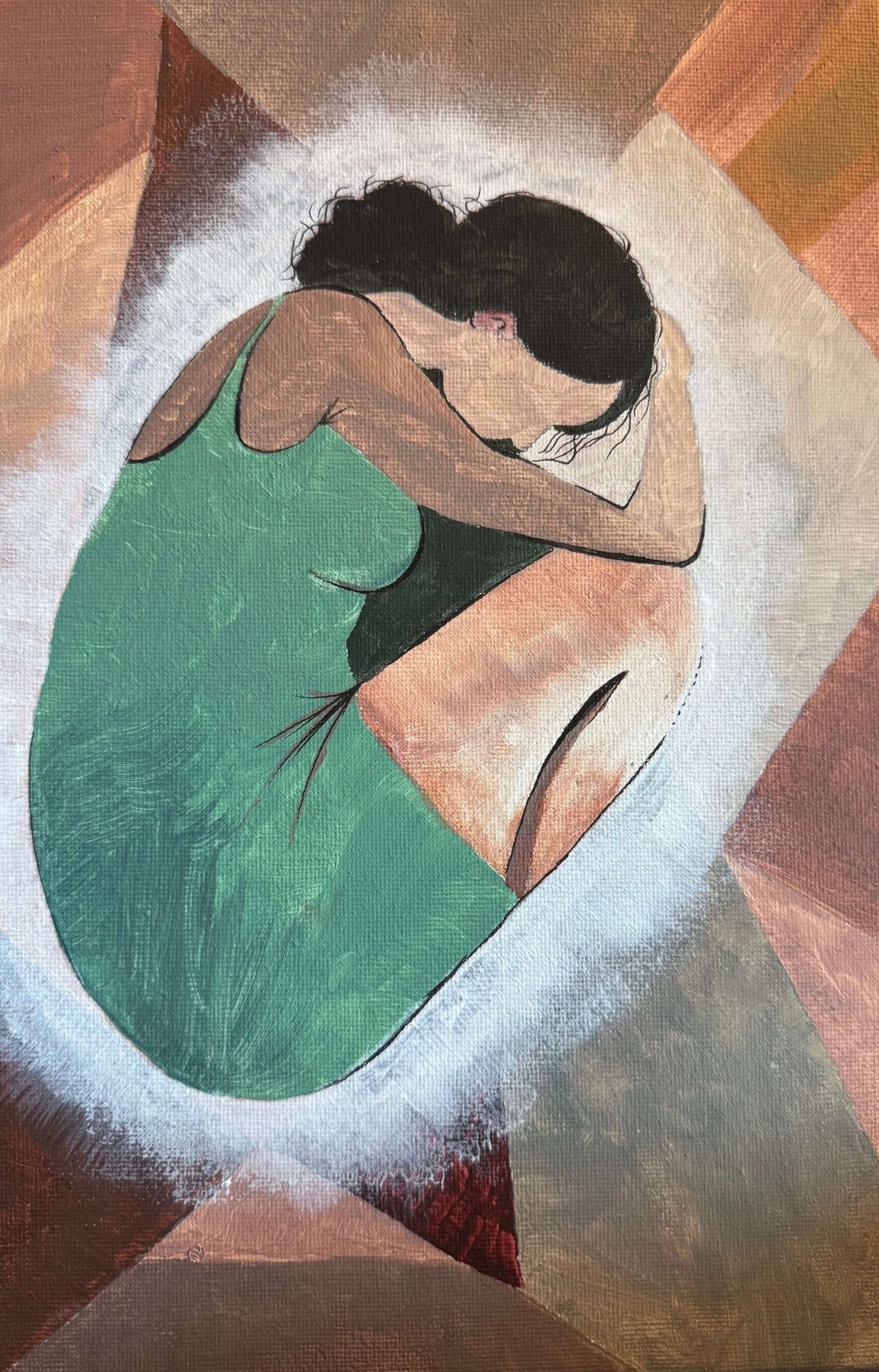
WOMB WITHIN
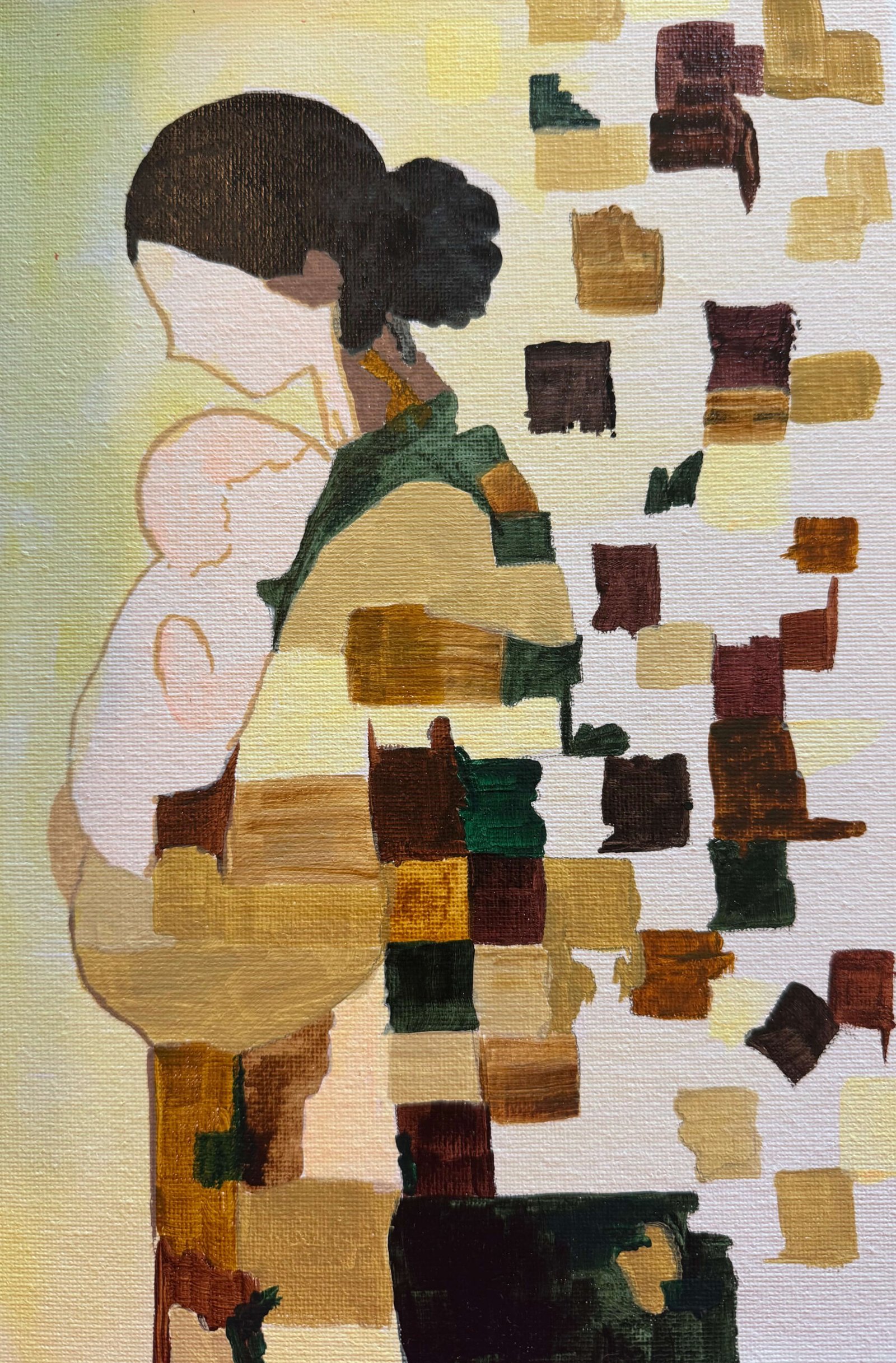
Pieces of Me
Motherhood is an act of giving—sometimes so profound that a woman begins to lose pieces of herself within it. In this work, the fragmented forms represent the many parts of identity, time, dreams, and energy scattered through the experience of motherhood. Yet at the center of this fragmentation, the embrace remains whole. The mother may appear to dissolve into the world around her, but the child she holds becomes the quiet center that keeps everything connected. She is made of fragments, but her love remains whole.
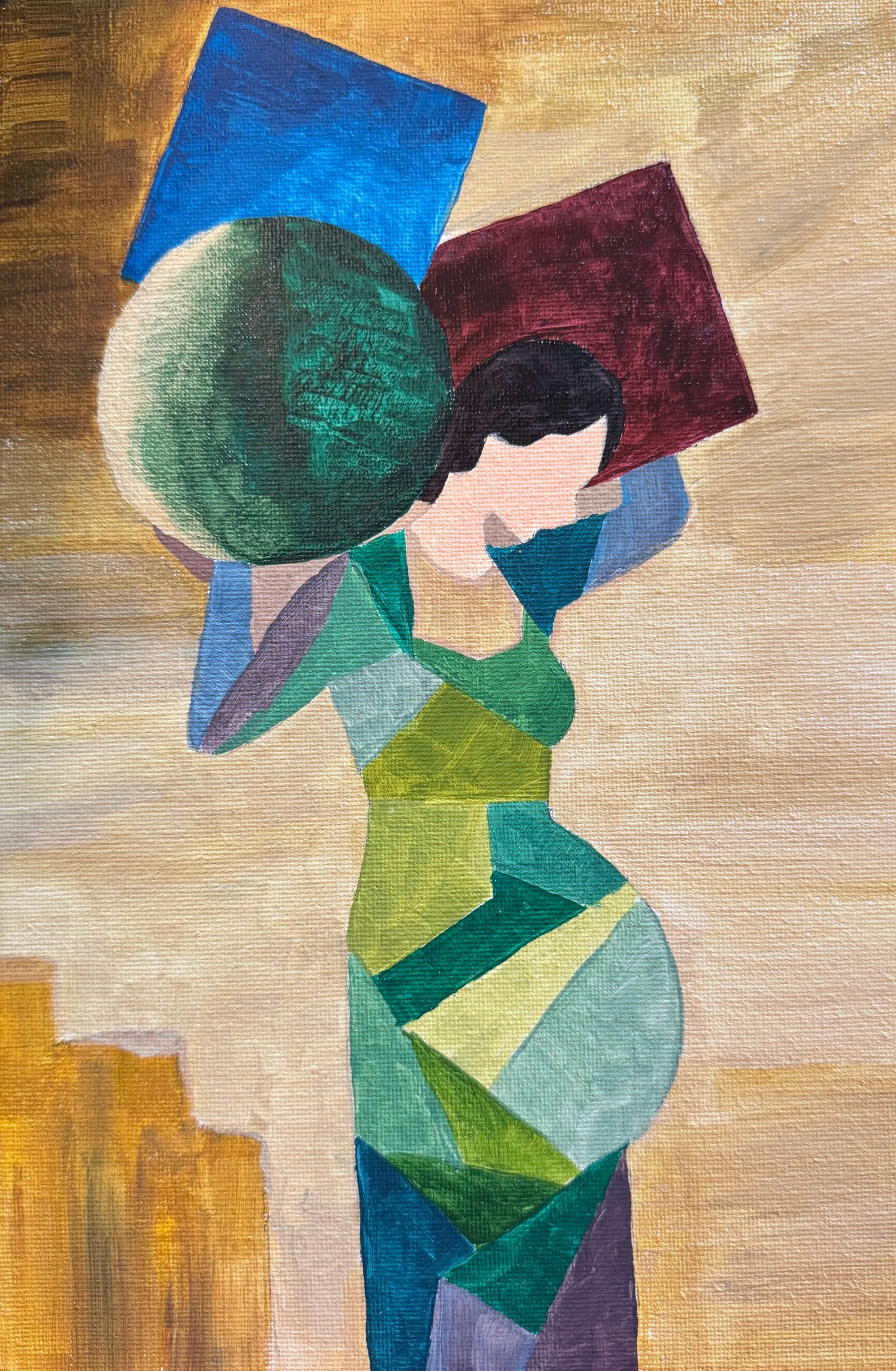
The Weight of Life
This work portrays a woman who, even on the threshold of motherhood, continues to carry the weight of life on her shoulders. The heavy forms above her symbolize the responsibilities, pressures, and struggles she bears while nurturing a new life within her. Her pregnant body, in contrast to this weight, represents endurance, creation, and a quiet yet powerful strength. The fragmented geometric forms suggest a woman shaped by many layers of experience—one who, despite the burdens she carries, remains standing and continues forward.
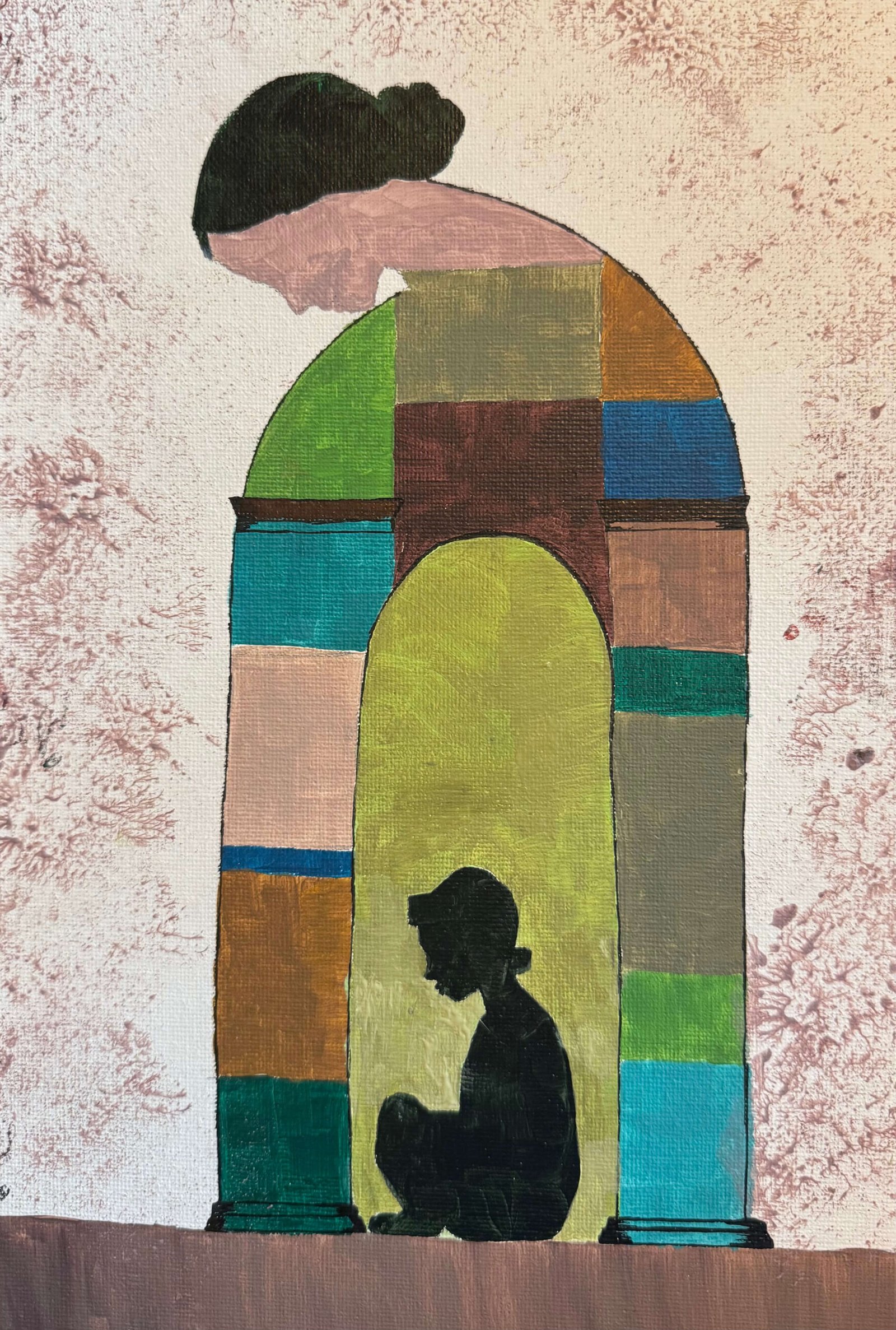
The Pillar
A woman is often more than a presence within a home; she is its structure. In this work, the female figure becomes part of the architecture itself—carrying its weight, holding its pieces together, and creating a space of protection beneath her. Within that shelter sits another female figure, suggesting vulnerability, memory, and the inner self that also longs to be protected. The work reflects the quiet paradox of womanhood: the one who becomes a shelter for others may also be searching for a place to rest. Through fragmented colors and architectural forms, The Pillar explores strength not as something rigid, but as the invisible endurance that holds a world together.
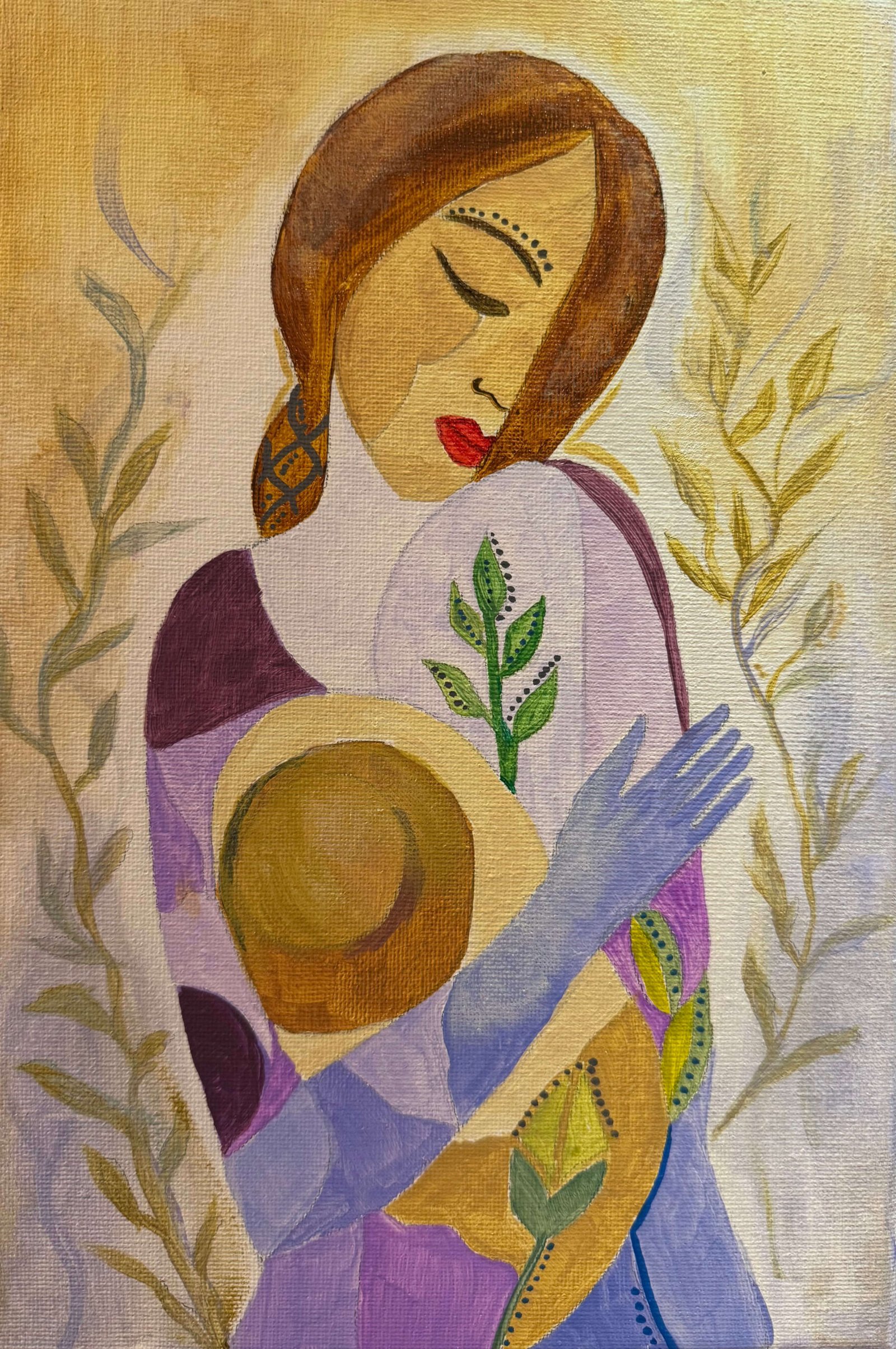
Fragments of Love
Identity is not formed in a single moment; it is shaped through countless memories, emotions, and relationships. In this work, the mother and child emerge from fragments of color, symbolizing the experiences that slowly construct who we become. Their faces are simplified, allowing the connection between them to transcend individuality and become universal. The botanical elements growing beside them represent hope, healing, and the quiet resilience that passes from one generation to the next. Rather than depicting motherhood as a single moment, this painting reflects it as an enduring force—one that leaves invisible marks on memory, identity, and the human spirit.
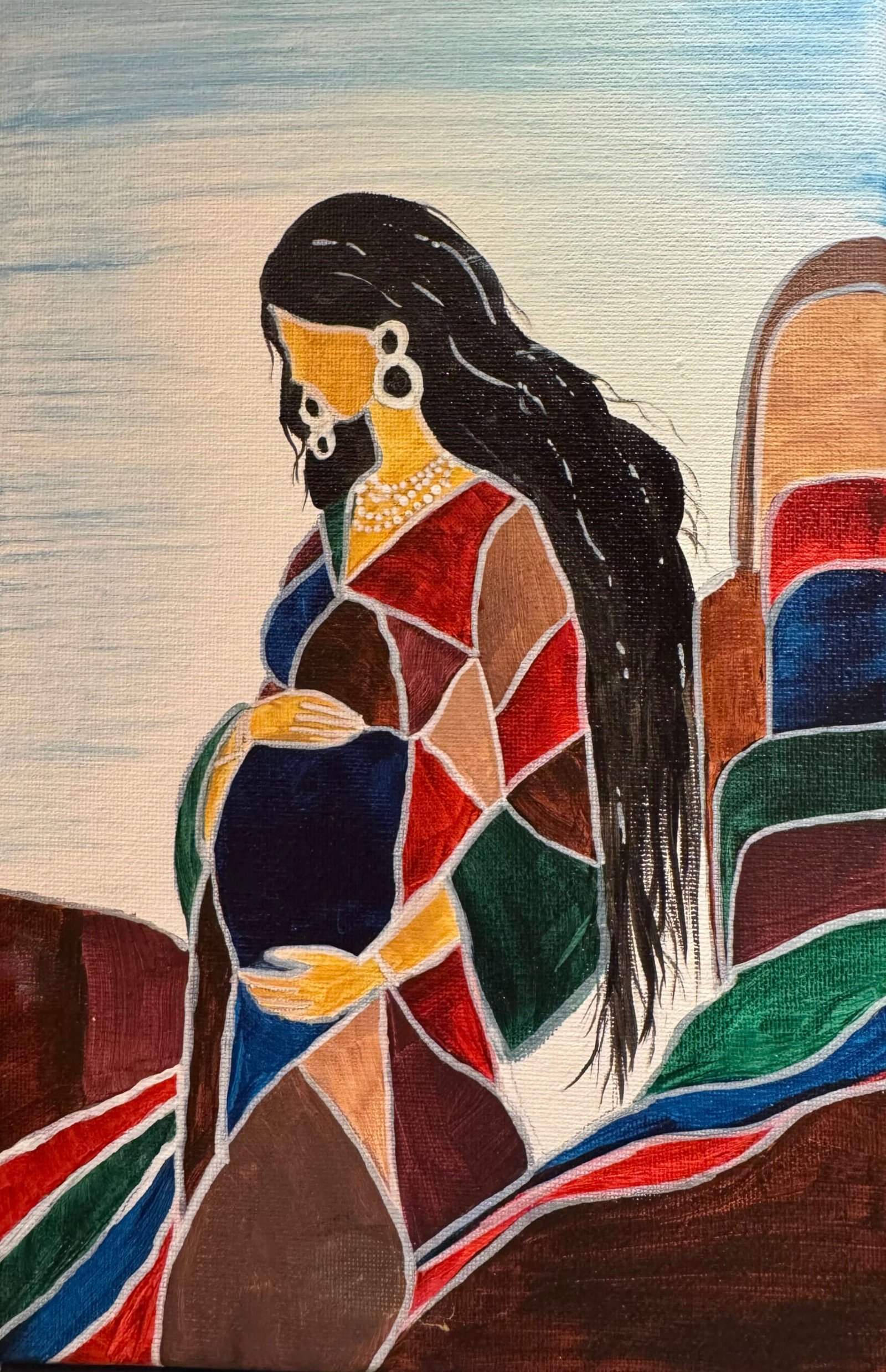
The Beginning Within
Within every beginning lies the promise of transformation. This painting portrays pregnancy not only as the creation of life, but as a symbol of hope, resilience, and renewal. The figure is intentionally simplified, with only the eyes preserved, allowing the viewer to move beyond personal identity and connect with the universal experience of creation. The geometric fragments that form her body represent the many memories, choices, and experiences that shape us before we shape another life. Her hands gently embrace the unborn child, expressing protection without possession. Freedom is revealed here as the ability to create, to nurture, and to choose hope even in an uncertain world. This work celebrates motherhood as an act of courage, and every new life as a quiet beginning of possibility.
Mother & Child
A mother’s embrace is the first place where we learn the meaning of belonging. This painting explores the silent bond between a mother and her child—a connection that exists beyond words, shaped by love, protection, and trust. The simplified forms invite the viewer to focus on emotion rather than identity, allowing every mother and every child to find themselves within the image. Soft earthy tones create a sense of warmth and serenity, while the delicate botanical elements symbolize growth, resilience, and the continuous cycle of life. This work is a celebration of motherhood as a universal language of compassion, strength, and unconditional love.